
Business · By Ayushi Shah · 6 August 2026 · 9 min read
Pattern Licensing Guide: Standard vs Exclusive — Choose the Right License for Your Brand
Standard or exclusive? Compare costs, rights and exclusivity, then use five questions, three brand scenarios and sample budgets to decide in five minutes.
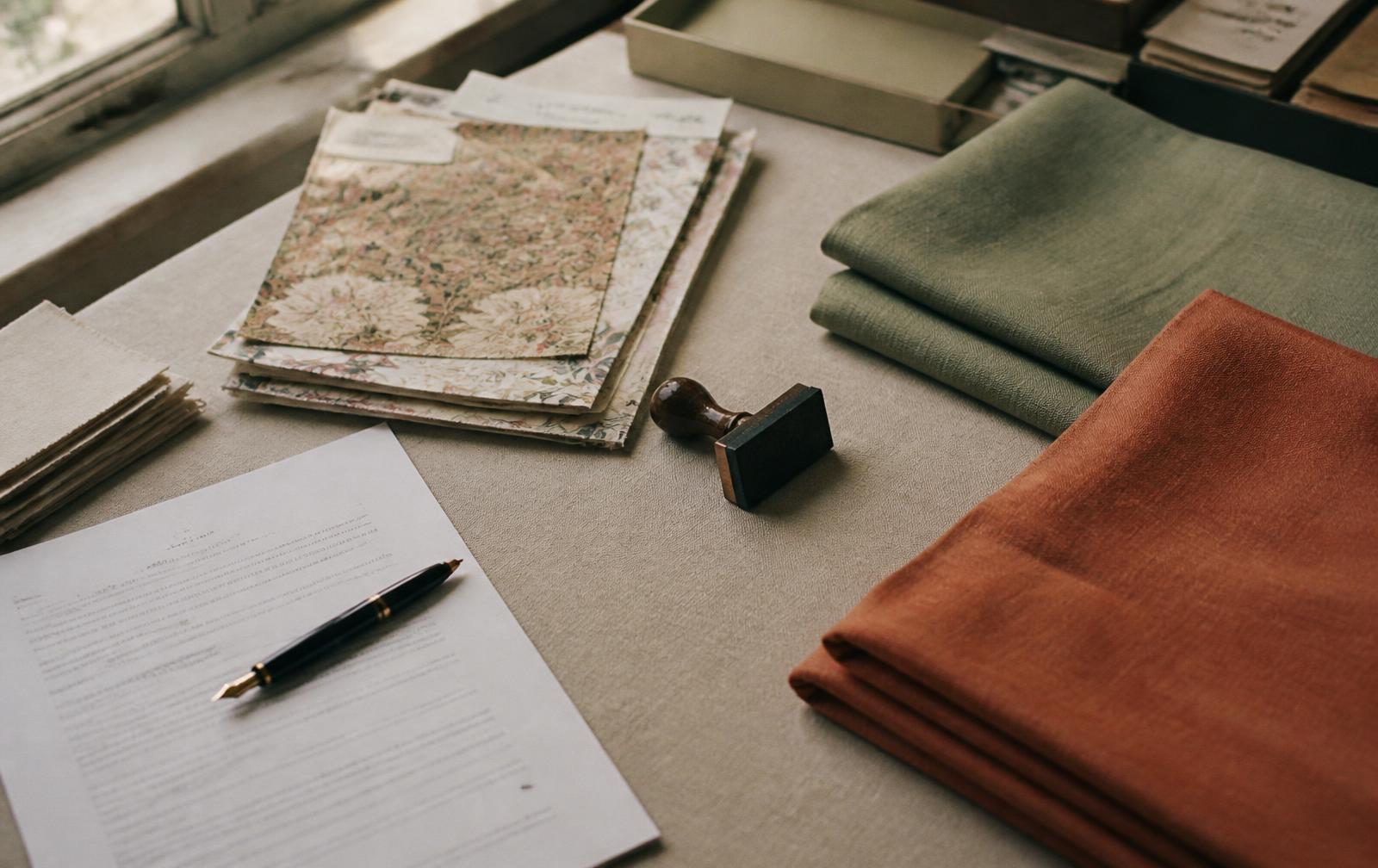
In short
Key takeaways
- A pattern licence is documented permission to use a design commercially — every Oura licence is a commercial licence.
- Standard licences (₹800–₹1,500) are shared: the design stays on sale and other brands can license it too.
- Exclusive licences (₹2,000–₹5,000+) are single-buyer: the pattern is permanently retired from sale after purchase.
- Rights are otherwise identical — full commercial use, recolouring and rescaling, permanent duration, no per-product fees.
- Standard is about abundance and choice; exclusive is about uniqueness and ownership.
- Most brands do best with a hybrid: 2–3 exclusive hero prints plus 10–20 standard supporting patterns, roughly a 30/70 budget split.
- Licence cost is typically 2–5% of finished product revenue, so cheap artwork that forces reprints costs far more than it saves.
- Exclusivity cannot be added later — a standard licence cannot be upgraded once the design is in circulation.
Choosing a pattern licence looks like a small line item until the print becomes the thing customers recognise you by. The licence decides whether a design is yours alone or shared with the brand selling next to you, whether it can be reused across categories for years, and how much of your design budget goes into one artwork versus ten.
Every studio purchase comes down to one question: Standard or Exclusive? Standard gives you full commercial rights at a lower price while the design stays on sale to other buyers. Exclusive removes the pattern from sale permanently so only your brand can print it. Neither is better — they solve different problems.
This guide explains what a pattern licence actually covers, breaks down both licence types in detail, compares them side by side, gives you five questions that settle the decision, walks through three real brand scenarios and sample budgets, and answers the questions buyers ask most. You should be able to decide with confidence in five minutes.
What is a Pattern License?
A pattern licence is the legal right to use an original design commercially. When you buy a seamless repeat from a studio, you are not buying the artwork's authorship — you are buying defined permission to print, sell and profit from it. That permission is what makes production safe.
Licensing exists because artwork is intellectual property. A designer spends days drawing, recolouring and testing a repeat; without licensing, that work could be copied endlessly with no return, and buyers would have no proof of their right to sell products carrying it. A licence protects both sides: the designer keeps authorship, the brand gets documented, defensible commercial rights.
The distinction that matters most is commercial use versus personal use. Personal use covers things you make for yourself — a cushion, a scrapbook, a class project. Commercial use covers anything you sell: garments, home textiles, stationery, packaging, print-on-demand listings. Every Oura licence is a commercial licence, so production and resale are covered from the moment you download.
Clarity serves everyone. Brands need to know what they can print, modify and resell without legal ambiguity; designers need to know how their work travels. Transparent licence terms remove the guesswork from both.
Standard Licenses Explained
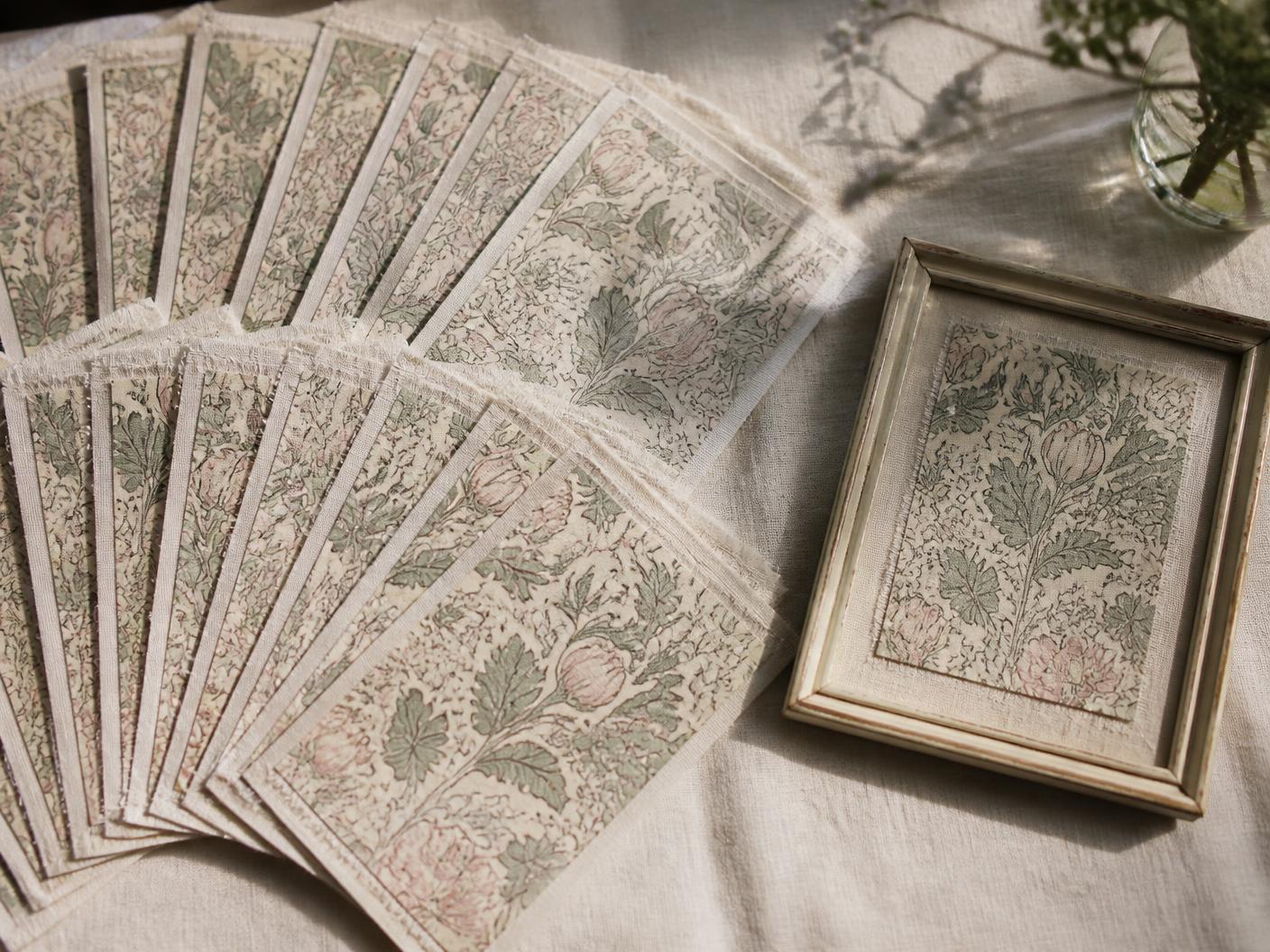
How Standard Licenses Work
A standard licence is a shared licence. The same design can be purchased by multiple buyers, and it stays in the catalogue indefinitely rather than being withdrawn after a sale. In practice, that means another brand — possibly a competitor — may print the same repeat.
- Multiple buyers can purchase the same design.
- The design remains available in the catalogue indefinitely.
- You share the artwork with other brands, including potential competitors.
- Costs meaningfully less than an exclusive licence — that is the trade-off.
- Available immediately: purchase, download, go into production the same day.
Pricing & Cost
Standard licences typically sit between ₹800 and ₹1,500 per pattern. That range makes them budget-friendly when you are licensing a set rather than a single hero print, and it suits seasonal, trend-driven launches where the print has a defined shelf life. You pay once and own the rights forever — there are no renewals, royalties or recurring costs.
Your Rights with Standard License
- Full commercial use across all product types.
- Fashion, home décor, stationery, print-on-demand and paper goods are all included.
- Freedom to modify colours and adjust scale to suit your collection.
- Indefinite usage rights with no expiry date.
- No cap on production volume.
- Usable across multiple collections under your brand.
Best For Standard Licenses
- Fashion brands launching new collections frequently.
- Stationery and gifting companies.
- Print-on-demand businesses where volume matters more than exclusivity.
- Home décor brands running seasonal ranges.
- Budget-conscious startups building a first collection.
- Companies licensing ten or more coordinating patterns at once.
- Brands that value variety over uniqueness.
The Trade-off with Standard
The trade is straightforward: no exclusivity, significant savings. Other brands may license the same design, which means the print can appear across several competitors and become recognisable as a market design rather than yours. If variety matters more than uniqueness, that is a perfectly sound strategy. If the print is meant to be a signature — the one people associate with your label — standard is the wrong tool.
Exclusive Licenses Explained
How Exclusive Licenses Work
An exclusive licence is single-buyer. The moment you purchase, the pattern is permanently removed from sale — it is never offered to anyone else again. The design effectively belongs to your brand, and documentation confirming the exclusivity is issued with the files.
- Only one buyer ever receives the design — you.
- The pattern is withdrawn from the catalogue immediately after purchase.
- It is never made available to another brand, at any price, at any time.
- The design becomes part of your brand's visual property.
- Licence documentation is provided with the files.
Pricing & Cost
Exclusive licences generally start around ₹2,000 and run to ₹5,000+, with custom pricing for more complex or larger-scale artwork. You are paying for complete uniqueness: the studio forgoes every future sale of that design. Pricing scales with design complexity and the artist's body of work, and the return is zero competition on that print.
Your Rights with Exclusive License
- Complete ownership of the design for commercial purposes.
- The same full commercial rights a standard licence carries.
- Freedom to modify, recolour, rescale and adapt the artwork.
- Permanent, indefinite usage with no expiry.
- Only your brand can use it — competitors cannot licence it.
- You can extend use to manufacturers and production partners working for you.
Best For Exclusive Licenses
- Premium and luxury fashion brands.
- Signature collections that carry brand identity.
- New brand launches establishing a distinct visual language.
- Brands building long-term, iconic collections.
- Companies in crowded categories that need real differentiation.
- Heritage and luxury home décor labels.
- Brands where the print effectively is the brand.
- Limited edition and capsule collections.
The Advantage of Exclusive
Exclusivity buys market separation. No other label carries the print, which supports premium positioning and pricing power, and the advantage is permanent rather than seasonal. Over time the brand and the pattern become associated with each other — the print starts doing recognition work that advertising would otherwise have to do, and a luxury price point becomes easier to justify.
Standard vs Exclusive: Side-by-Side Comparison
| Consideration | Standard licence | Exclusive licence |
|---|---|---|
| Available to multiple buyers? | Yes | No — one buyer only |
| Can competitors use it? | Yes | No |
| Stays in the catalogue indefinitely? | Yes | No — retired after purchase |
| Typical price range | ₹800–₹1,500 | ₹2,000–₹5,000+ |
| Full commercial use included? | Yes | Yes |
| Can you modify colours and scale? | Yes | Yes |
| Usage duration | Permanent | Permanent |
| Best use case | Volume and variety | Signature and premium |
Read down the table and the pattern is clear. Rights are almost identical: both licences give full commercial use across every product type, both allow recolouring and rescaling, and both last permanently. The differences sit entirely in availability and price.
The fundamental difference: Standard is about abundance and choice, while Exclusive is about uniqueness and ownership. A standard licence lets you build a wide, varied catalogue quickly and cheaply — ideal when customers are buying the product and the print is one attractive attribute among several. An exclusive licence concentrates the same budget into one design that nobody else can print — ideal when the print is the reason someone chooses your label.
Cost follows that logic. Roughly two to three standard patterns fit inside the price of one exclusive. So the real question is not which licence is better value in the abstract, but whether this particular design needs to be unavailable to everyone else. If the answer is no, standard is the efficient choice. If the answer is yes, standard cannot deliver it later — exclusivity has to be chosen at purchase.
Making the Decision: 5 Questions to Ask Yourself
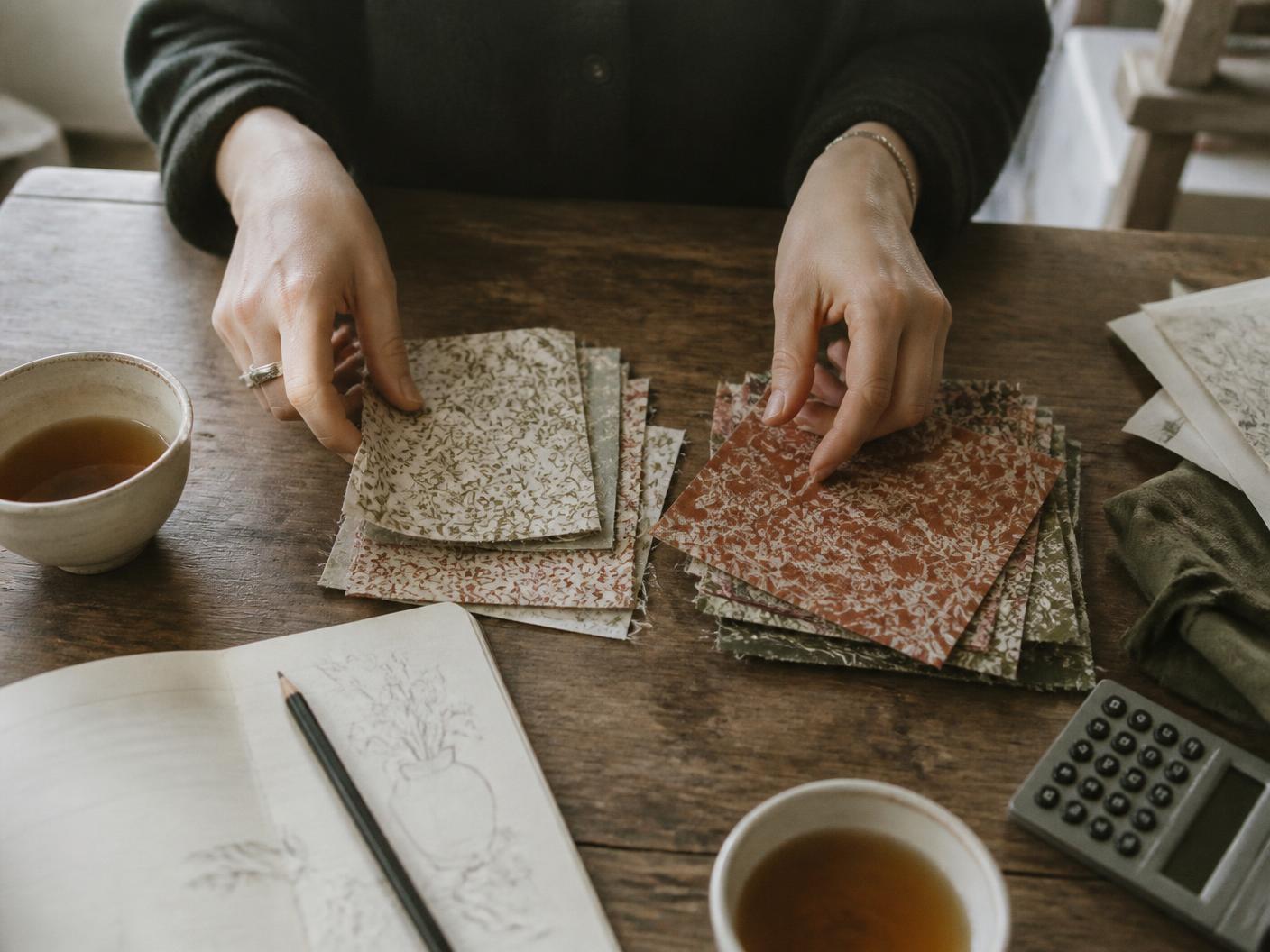
1. Is this a core or signature print for my brand?
If yes, exclusive makes sense — you are protecting identity, not just buying artwork. If no, standard is fine: it is a functional print doing a job in a collection, not carrying the brand.
2. Do you compete in a crowded or saturated space?
If yes, exclusive: in a saturated category, differentiation is survival and a shared print erodes it. If no, standard: efficiency and range matter more than separation.
3. What is your annual pattern licensing budget?
- ₹10,000–₹50,000+ — exclusive licences are comfortably affordable.
- Under ₹5,000 — standard is the right choice; build range first.
- ₹5,000–₹10,000 — go hybrid: one exclusive, several standard.
4. Will this pattern run across multiple products and years?
If yes, exclusive: a long-life print used across categories justifies the premium many times over. If no, standard: seasonal or temporary use does not warrant the higher investment.
5. Are you launching a new brand or scaling an existing one?
If launching, exclusive builds a unique identity from day one. If scaling, standard lets you maximise variety and refresh frequently as collections turn over.
Scoring: three or more answers pointing to exclusive → choose exclusive. Three or more pointing to standard → choose standard. A mixed result is not indecision, it is the honest answer: use a hybrid approach and buy some of each.
Real-World Scenarios: What Brands Actually Choose
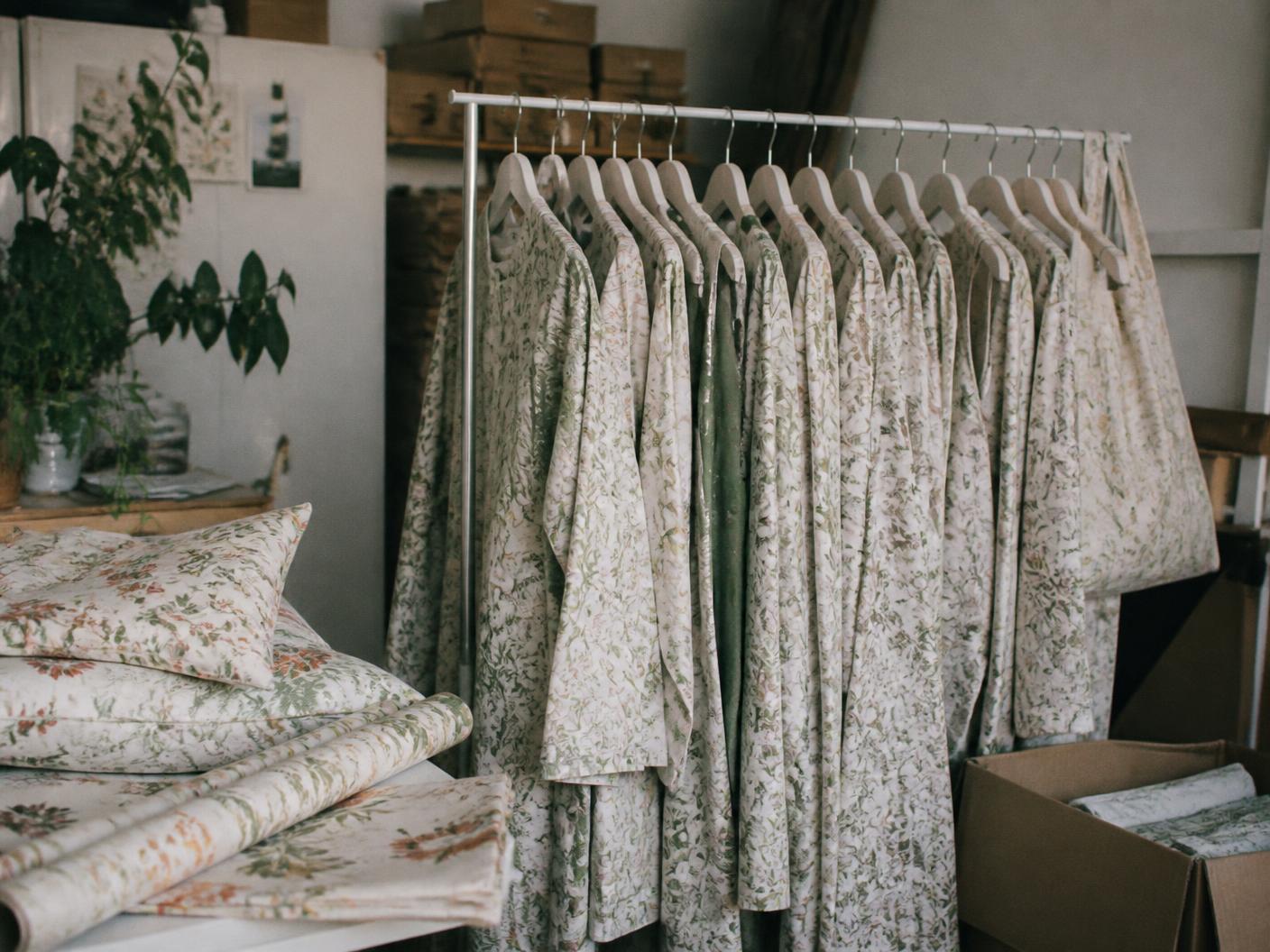
Scenario 1: Fashion startup launching a first collection
A new indie label wants a recognisable identity from the first drop, with roughly ₹15,000 to spend in year one. The workable split is two to three exclusive patterns plus three to four standard ones: exclusives carry the hero pieces — dresses, signature silhouettes — while standards handle linings, coordinates and supporting styles. At about ₹3,000 for each of two exclusives and ₹1,000–₹1,500 for four standards, the spend lands near ₹11,000–₹12,000. The outcome is premium positioning where it shows and flexibility everywhere else; the collection reads curated rather than assembled.
Scenario 2: Home décor brand with seasonal collections
An established décor brand refreshes ranges every season on a ₹25,000–₹30,000 annual budget. Most of that goes to standard licences, with one or two exclusives held back for flagship prints. Seasonal designs do not need exclusivity — they are replaced within the year — so one to two exclusives at around ₹4,000 plus twenty-plus standards at roughly ₹20,000 totals about ₹24,000. The result is a large seasonal catalogue for customers who shop on variety, anchored by one or two signature prints, with fast iteration and controlled cost.
Scenario 3: Print-on-demand business
A POD platform with 100+ products has ₹30,000–₹40,000 to spend and buys standard licences only — typically 35 to 40 of them. Volume and variety drive the business; POD customers buy the product and the design that suits them, not exclusivity. At ₹800–₹1,000 per pattern the spend runs ₹28,000–₹40,000 and yields 35–40 designs deployable across the full product range. Choice drives conversion, and an exclusive licence in this model would buy something the customer never asked for.
Building Your Pattern Wardrobe: Licensing Strategy
The hybrid approach (recommended for most brands)
Invest deliberately in two or three exclusive hero patterns and supplement with ten to twenty standard patterns for range. The exclusives create premium identity; the standards create flexibility and let you fill out a collection without stretching the budget. The model scales cleanly — as revenue grows, you add exclusives rather than restructuring.
Budget allocation tips
- About 30% of the pattern budget to exclusive licences — signature investments.
- About 70% to standard licences — supporting prints and variety.
- Allocate annually rather than project by project, so hero prints are planned, not improvised.
- Example: ₹20,000 a year = ₹6,000 exclusive + ₹14,000 standard.
Pattern refresh strategy
- Exclusive patterns stay in the wardrobe permanently — they are the constant.
- Standard patterns cycle seasonally and get refreshed annually.
- New standard launches keep the collection feeling current.
- Patterns accumulate over time into a genuine library you own.
Maximising ROI through colourways
Both licence types allow recolouring, so a single pattern can serve several colourways without any further licensing cost. Buy one design, develop one or two colourways in-house, and commission additional colourways through a custom order when a season needs them. It multiplies your design options without multiplying spend.
Common Licensing Questions Answered
Can I modify colours on a licensed pattern?
Yes. Both standard and exclusive licences allow you to recolour, adjust scale and adapt the design. Modifications are included at no additional cost.
What if I want to use one pattern on multiple product types?
Both licences cover all uses — fashion, home décor, stationery and print-on-demand are all included. There are no per-product fees.
How long do I own the licence?
Permanently. Both standard and exclusive licences are forever licences with no expiry, so the rights remain yours indefinitely.
Can I resell products made with these patterns?
Yes. The licence covers your commercial production and sales, and you own the finished products completely.
What file formats come with a licence?
Both include PSD (editable), TIFF (print-ready) and PNG (web), all at 300 DPI and production-ready. Licence documentation is included.
What if I want to make a pattern exclusive later?
Once a design has been purchased as standard, those rights are already in circulation and cannot be withdrawn. To guarantee exclusivity, select exclusive at the time of purchase.
Does it cost more to use an exclusive pattern on multiple products?
No. Once purchased, use it wherever you want — one price, unlimited commercial use, no additional fees per product type.
Budget Planning: Sample Pattern Investment Plans
Starter budget — ₹5,000
- Five standard patterns at ₹800 = ₹4,000.
- One standout standard pattern at ₹1,000 = ₹1,000.
- Total: ₹5,000.
Five different patterns, a quick start, and proven quality without a large commitment — a sensible way to test Oura files in production before committing further. Suits startups, single seasonal collections and limited budgets.
Mid-range budget — ₹15,000
- Two exclusive hero patterns at ₹2,500 each = ₹5,000.
- Eight standard supporting patterns at ₹1,000 = ₹8,000.
- One premium standard at ₹1,500 = ₹1,500.
- Total: ₹14,500.
Premium positioning from the exclusive hero prints, with enough standard patterns behind them to build a full, coordinated collection. The result feels professional and curated. Suits established brands and brand-building phases.
Premium budget — ₹40,000
- Three to four exclusive signature patterns = ₹10,000.
- Twenty-plus standard coordinating patterns = ₹20,000.
- One or two premium artist collaborations = ₹10,000.
- Total: ₹40,000.
A complete brand narrative: multiple signature prints, a deep supporting library and special editions that give a collection its highlights. Suits luxury labels, flagship collections and established businesses.
Why Oura for Pattern Licensing?
What makes Oura different
- Handcrafted, original designs — nothing pulled from stock libraries.
- Every pattern starts from observation, so each has a story behind it.
- Production-ready files at 300 DPI, tested for print.
- Clear, transparent licensing terms with no ambiguity.
- Support continues after purchase, not just up to checkout.
- Full documentation of your commercial rights.
- Patterns treated as design infrastructure, not a luxury add-on.
Oura's standard approach
- Designs remain available to multiple buyers.
- Lower investment barrier at ₹800–₹1,500.
- Tested, proven patterns already in production elsewhere.
- Instant download and immediate production.
- Full commercial rights included.
Oura's exclusive approach
- Designs retire from the catalogue the moment they are purchased.
- Permanent single-buyer ownership.
- Built for signature collections.
- Premium positioning through genuine exclusivity.
- Licence documentation included.
Oura's custom approach
When nothing off the shelf fits, a custom commission starts from your brief — category, palette, motif and end use — and produces original artwork drawn specifically for your brand, never reused, with full commercial rights included.
How to browse and choose
- Filter by licence type — standard or exclusive.
- Filter by category: botanical, geometric, menswear, home and more.
- Filter by colour palette to match an existing range.
- See which collection a pattern belongs to.
- Read the pattern story and its suggested use cases.
The Licensing Investment: ROI Perspective
What you are actually paying for
- Artwork quality — handcrafted, not generated or pulled from stock.
- Time saved: instant download instead of a six to eight week commission.
- Risk reduction: proven patterns rather than experimental artwork.
- Commercial rights clarity with no legal ambiguity.
- Production-ready files that need no reformatting.
- Lifetime usage rights and ongoing support.
An ROI calculation
Take a single pattern at ₹1,000 standard or ₹2,500 exclusive, printed across 100 units retailing at ₹500 each — ₹50,000 of revenue. The pattern accounts for roughly 2–5% of revenue on that run, an effective return of several thousand percent against the licence fee. Set against fabric, production, packaging and marketing, the artwork is one of the smallest costs in the product and one of the most visible.
Why cheap patterns actually cost more
- Low-quality artwork needs redrawing before it can go to print.
- Wrong DPI forces reprints once the fault appears on fabric.
- Poor registration in the repeat produces visible seams and customer complaints.
- Time spent managing those problems is a real business cost.
- Customers return products that look badly printed.
- Replacement and reprint costs quickly exceed whatever the cheap file saved.
Premium patterns protect margin
Proven artwork means no revision cycles, correct files mean production runs to schedule, and professional standards mean the finished product matches what the customer expected. Happy customers reorder. At 2–5% of revenue, the pattern is an inexpensive way to protect the other 95%.
Next Steps: How to License Your First Patterns
Step 1 — Define your brand positioning
Premium or luxury? Focus on exclusive. Volume or budget-driven? Focus on standard. Somewhere between? Mix both licence types deliberately rather than by accident.
Step 2 — Audit your product range
- Which patterns will be hero prints that define the brand?
- Which are supporting prints coordinating with the heroes?
- How often does your collection refresh?
- What is the annual design budget those refreshes sit inside?
Step 3 — Set your annual pattern investment budget
- Build pattern licensing into the annual design and product budget.
- Split it between exclusive and standard using the 30/70 guide.
- Reserve part of it for seasonal refreshes.
- Allow the figure to grow with revenue.
Step 4 — Browse the Oura catalogue
Filter by licence type, category and colour, save favourites as you go, and read the collection stories to understand how patterns were built to coordinate. Start with standard licences or exclusive licences.
Step 5 — License and download instantly
Purchase in one step and download every format — PSD, TIFF and PNG — immediately. Licence documentation is emailed at the same time, so production can begin the same day.
Step 6 — Plan your pattern growth
- Add new patterns quarterly or seasonally rather than all at once.
- Scale up exclusive purchases as revenue allows.
- Refresh standard patterns annually.
- Build the library steadily — it compounds into a real brand asset.
Conclusion
Standard is abundance and budget; exclusive is uniqueness and ownership. Both carry full commercial rights, both allow modification, both last forever — the only real variables are who else can use the design and what it costs.
Pattern licensing is not a luxury line item. It is business infrastructure that protects your production investment and your brand identity, and at 2–5% of finished product revenue it is a minimal cost with outsized impact on how your work is perceived.
For most brands the hybrid approach wins: a few exclusive hero prints for identity, mostly standard patterns for range and refresh. Oura's role is to supply original, production-ready artwork at fair prices with licensing terms you never have to decode. Choose your first patterns using the five questions above, start with what fits your budget and positioning, and scale from there.
Questions
Pattern licensing, answered.
Keep reading
Related reading.
- Floral Pattern Trends 2026: Prints You'll See Everywhere This YearSofter colour, larger blooms and hand-drawn detail — the ten floral print directions shaping fashion, home décor and lifestyle products in 2026.
- Surface Pattern Design 101: Seamless Repeats ExplainedHow seamless patterns actually work — repeat types, 300 DPI, file formats, scale, colour and the five mistakes that cost brands money.
- Commission a custom pattern for your collectionSend a brief and we'll design a repeat around your brand.
- More field notes from the studio
New pattern drops
Get new patterns before anyone else.
A quiet letter from the studio — new drops, exclusive releases and print notes. No noise, unsubscribe any time.
More field notes are in the works.
Back to journal